
Pressure Sensitive Labels Market to Grow from USD 26.19 Billion in 2026 to USD 38.08 Billion by 2035
Pressure Sensitive Labels Market (2026 - 2035)
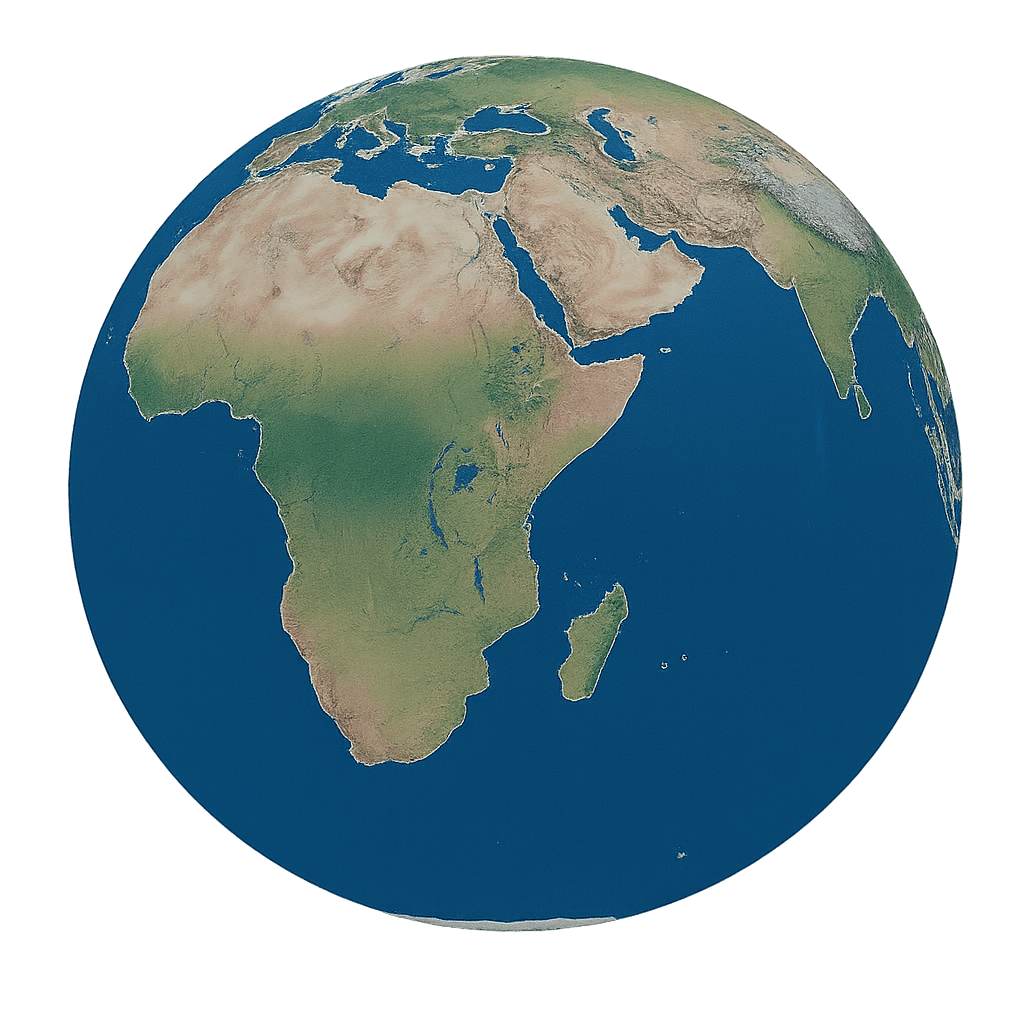
North America accounted for approximately 34% of global revenue in 2025, anchored by pharmaceutical serialization demand.
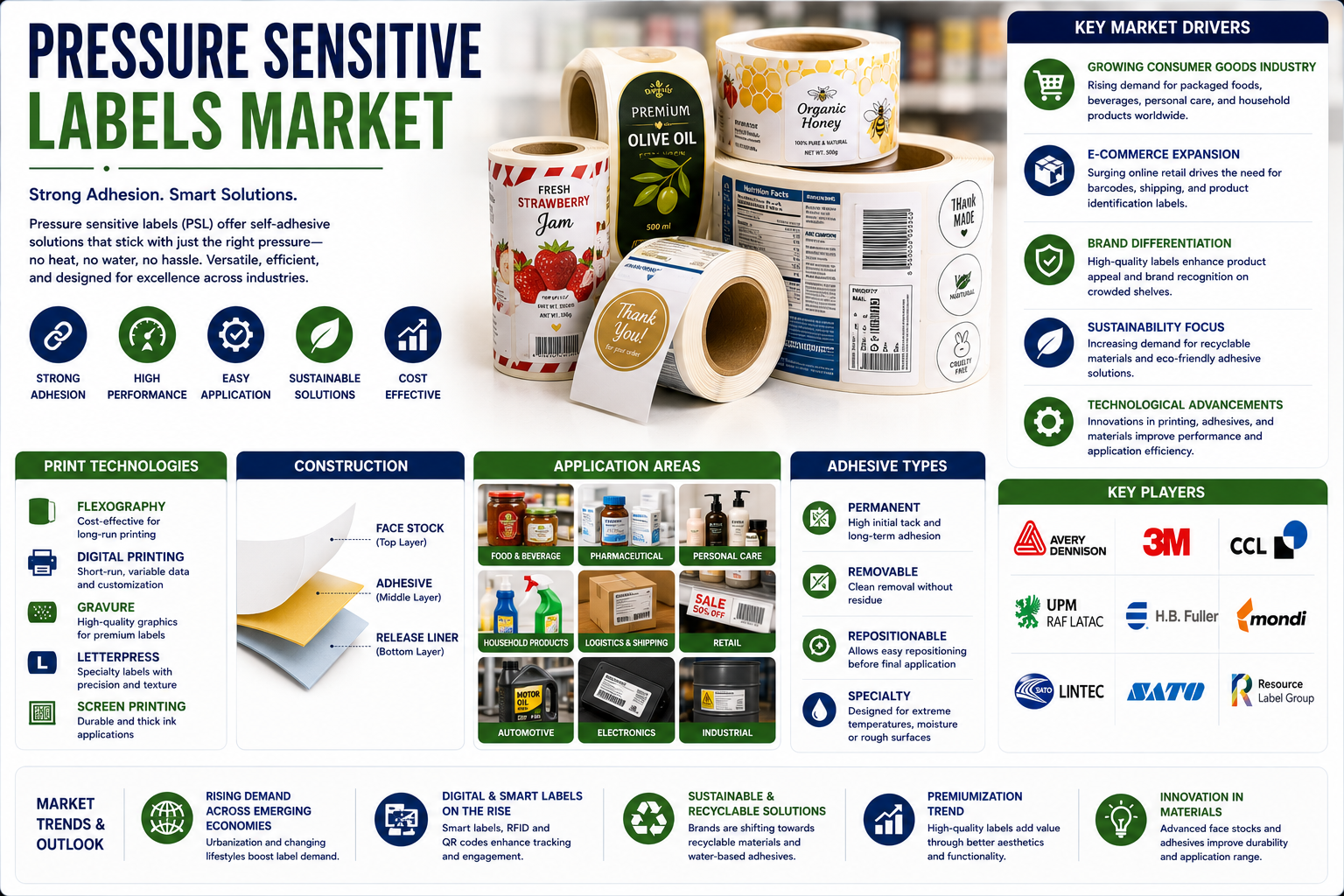
TX, UNITED STATES, July 30, 2026 /EINPresswire.com/ -- The pressure sensitive labels market reached a valuation of USD 25.12 billion in 2025 and is projected to grow from USD 26.19 billion in 2026 to USD 38.08 billion by 2035, registering a compound annual growth rate of 4.25% during the forecast period. Growth is being shaped by two powerful catalysts: the global expansion of e-commerce logistics, which demands durable address and return labels at unprecedented volumes, and tightening traceability mandates across food and pharmaceutical supply chains. The EU's Falsified Medicines Directive and the U.S. FDA's Drug Supply Chain Security Act continue to impose serialization requirements that directly increase label consumption per unit shipped.A technology shift is well under way in the market. Conventional analog presses that dominated for decades are giving way to digital inkjet and electrophotographic platforms capable of economical short-run production. Global investment in digital label press installations exceeded USD 1.8 billion cumulatively through 2024, driven by brand owners seeking versioned packaging, late-stage customization, and faster time-to-shelf. Producers are simultaneously scaling sustainability efforts, including linerless formats, compostable facestocks, and bio-based adhesives, to comply with Extended Producer Responsibility legislation expanding across the EU and parts of Southeast Asia.
North America commands the largest share of the market at roughly 34% of global revenue, supported by mature consumer goods and pharmaceutical end-use sectors. Asia-Pacific is the fastest-growing region with a CAGR of 5.75%, fueled by rising packaged-food penetration in India and ASEAN nations. Europe holds the second-largest share at approximately 27%, where regulatory harmonization under the EU Green Deal is accelerating the adoption of recyclable label substrates. The next decade will see intensifying competition as converters in developing markets build scale and challenge established Western suppliers.
Market Segmentation
By Print Process
Flexography held a 41.2% share of the market in 2025, reflecting its cost efficiency for long-run commodity labels; the technology commands its lead thanks to throughput advantages on runs exceeding 50,000 linear meters, and HD flexo plate advances have narrowed the quality gap with gravure, letting converters consolidate onto a single press platform for both prime and promotional labels. Gravure was valued at about USD 3.14 billion in 2025, retaining a stronghold in premium segments such as spirits, tobacco, and high-end cosmetics, where tonal consistency across millions of impressions justifies higher plate costs. Inkjet-based digital printing is the clear growth leader, expanding at a projected 7.4% CAGR through 2035 as brand owners shift to shorter production runs; single-pass inkjet platforms from suppliers such as Durst, Domino, and Screen GP now match flexo-level throughput on runs under 20,000 meters, making them economically competitive for a growing share of market volume. Screen printing held about 5.8% share in 2025, serving specialty tactile-effect applications, letterpress was valued at about USD 1.38 billion in 2025, reflecting a legacy installed base concentrated in Europe, and other hybrid and offset niche processes are growing at a 3.1% CAGR.
Download Report Sample Copy with TOC: https://www.marketresearchfuture.com/sample_request/1497
By End-User
Food and beverage sectors together accounted for USD 11.30 billion in 2025, making them the dominant demand base in the market. Food alone held about 28% share, driven by mandatory nutritional labeling, allergen declarations, and freshness-date printing requirements that continue to expand globally, while the beverage segment, valued at about USD 4.55 billion in 2025, is fueled by craft beer, premium spirits, and ready-to-drink categories demanding differentiated label constructions featuring metallic inks, textured substrates, and embossed finishes. Healthcare is growing at a 5.3% CAGR, driven by serialization and tamper-evidence requirements. Cosmetics represents the fastest-growing end-user category at a projected 5.97% CAGR, as beauty brands accelerate SKU launches, often exceeding 50 new SKUs per brand per year, and demand multi-page booklet labels, clear-on-clear constructions, and smart-label integrations that engage consumers via smartphone interactions. Household products held about 8.5% share in 2025, tied to private-label growth, industrial applications were valued at about USD 2.89 billion in 2025, driven by durability and GHS compliance needs, and other end uses, spanning logistics, retail, and automotive, are growing at a 3.4% CAGR.
By Adhesive Type
Water-based acrylic adhesives dominate the market with over 50.6% share in 2025, favored for their broad substrate compatibility, low VOC emissions, and regulatory acceptance in food-contact applications. Hot-melt rubber-based systems were valued at about USD 5.82 billion in 2025, retaining significant share in cold-chain logistics and freezer-grade applications where initial tack at sub-zero temperatures is critical. Solvent-based adhesives are growing slowly at a 2.1% CAGR, in decline due to tightening VOC regulations, while UV-curable adhesives, though still a niche, are growing rapidly at a 6.2% CAGR as converters pursue faster curing speeds and reduced energy consumption on high-speed press lines.
Regional Market Analysis
North America holds approximately 34% of global market share in 2025, anchored by pharmaceutical serialization demand and e-commerce labeling needs. The United States drives the bulk of North American demand, accounting for about 62% of regional share, supported by the world's largest pharmaceutical packaging sector and mature e-commerce infrastructure tied to Drug Supply Chain Security Act compliance. Canada is growing at a 3.9% CAGR, where cannabis legalization has created a specialized labeling niche requiring child-resistant, compliance-heavy constructions, alongside nutraceutical labeling demand. Mexico, valued at about USD 1.37 billion in 2025, benefits from nearshoring trends that are expanding manufacturing output and, by extension, industrial labeling requirements.
Europe holds approximately 27% of global share, with demand shaped by the EU Packaging and Packaging Waste Regulation, which mandates recyclability criteria for all packaging components, including labels, by 2030. Germany is growing at a 3.8% CAGR, with its industrial base generating high-volume demand for durable labels in automotive and chemical applications. The UK was valued at about USD 1.25 billion in 2025, driven by retail private-label growth, while France holds about 15% of regional share, propelled by its cosmetics and luxury packaging industry, home to global brand owners who push premiumization in label materials and finishes. Italy is growing at a 3.6% CAGR on food and wine label heritage, Spain was valued at about USD 0.62 billion in 2025, tied to agricultural export labeling, the Nordic countries hold about 9% of regional share on sustainability-first substrate adoption, Russia is growing at a 2.9% CAGR amid import substitution in labeling, and the rest of Europe holds about 18% of regional share, reflecting ongoing regulatory harmonization.
Purchase Now: https://www.marketresearchfuture.com/checkout?currency=one_user-USD&report_id=1497
Asia-Pacific represents the fastest-growing region in the market, projected to expand at a 5.75% CAGR between 2026 and 2035. China holds about 38% of regional share, its massive consumer goods sector generating the largest absolute volumes in the region through scale manufacturing and FMCG expansion. India is growing fastest within the region at a 6.8% CAGR, as its FSSAI regulatory framework mandates front-of-pack nutritional labeling that increases per-unit label area and complexity. Japan was valued at about USD 1.15 billion in 2025, tied to precision electronics labeling, South Korea holds about 11% of regional share on beauty and skincare labeling demand, ASEAN markets are growing at a 5.9% CAGR as Vietnam, Indonesia, and the Philippines transition from unpackaged to packaged food distribution, creating greenfield demand for self-adhesive labels, and the rest of Asia-Pacific holds about 8% of regional share, driven by emerging pharmaceutical and agrichemical labeling needs.
South America, valued at about USD 2.01 billion in 2025, is driven by organized retail expansion. Brazil anchors the region with about 52% of regional share, supported by strong beverage and personal-care sectors alongside agribusiness labeling demand. Argentina is growing at a 3.7% CAGR on wine and food export compliance, while the rest of South America was valued at about USD 0.58 billion in 2025, tied to retail modernization. ANVISA's evolving front-of-pack warning label regulations, modeled on Chile's program, are expanding label real estate across the region and driving re-qualification of adhesive systems for tropical storage conditions.
The Middle East and Africa region, valued at about USD 1.76 billion in 2025, is benefiting from halal certification labeling needs and industrial growth. Saudi Arabia is growing at a 4.1% CAGR under its Vision 2030 industrial diversification program, which is expanding domestic food processing and pharmaceutical manufacturing capacity. The UAE holds about 24% of regional share, functioning as a re-export and logistics hub that generates demand for durable shipping and compliance labels able to withstand high-temperature environments. South Africa was valued at about USD 0.32 billion in 2025, tied to FMCG and pharmaceutical demand, Egypt is growing at a 3.9% CAGR on food-processing sector growth, and the rest of the region holds about 38% of regional share, driven by halal and export certification needs.
Growth Drivers
E-commerce logistics expansion is the leading growth driver, estimated to contribute approximately 22% of overall CAGR globally over the short term. In 2024, there were more than 180 billion e-commerce parcels shipped worldwide, and each one needed at least one address label and often a return label. Because pressure-sensitive formats predominate in logistics labeling, applying swiftly on automated lines and adhering consistently to corrugated substrates, the market directly benefits from this trend. Over 7 billion shipments are processed by Amazon alone each year, and regional fulfillment networks in Latin America and Southeast Asia are replicating this model at double-digit growth rates.
Digital press adoption for short runs contributes an estimated 18% of CAGR, concentrated in North America and Europe over the medium term. Over 8,500 digital label presses are currently in use across commercial converters and brand-owner in-house facilities, a 14% increase in the installed base globally in 2024. Plate expenses are eliminated, changeover times are reduced to minutes, and variable-data printing, necessary for advertising campaigns and regulatory compliance, becomes possible; converters report that over the past five years, average order quantities have decreased by 30% while order frequency has increased by 45%.
Pharmaceutical serialization mandates contribute roughly 16% of CAGR, concentrated in North America, the EU, and India over the medium term. U.S. DSCSA enforcement milestones, which reached enhanced product tracing requirements in November 2024, mandate unique serialized identifiers on each pharmaceutical package, while the EU's Falsified Medicines Directive imposes comparable anti-tampering and track-and-trace obligations. These regulations increase label content density and often require specialized substrates with tamper-evident features, boosting per-unit label value. India's FSSAI labeling standards, expected to expand serialization to nutraceuticals by 2027, will add another high-growth compliance layer.
Sustainability and linerless formats contribute an estimated 14% of CAGR, concentrated in Europe and Asia-Pacific over the long term. Extended Producer Responsibility frameworks now cover packaging waste in 27 EU member states, parts of Canada, and several Australian states, pressuring brand owners to reduce non-recyclable components in their label constructions. Linerless label technology eliminates the silicone-coated release liner, historically 40–50% of label material waste, and can cut material consumption by up to 40% per linear meter; major converters invested over USD 320 million in linerless-capable press lines and adhesive R&D between 2022 and 2025.
Premiumization in cosmetics and personal care contributes roughly 12% of CAGR globally over the medium term, food-safety labeling regulations add about 10% across Asia-Pacific and South America over the long term, and smart and connected label integration rounds out the driver set at an estimated 8% of CAGR in North America and Europe over the long term.
Full Report Summary: https://www.marketresearchfuture.com/reports/pressure-sensitive-labels-market-1497
Future Outlook
AI-driven quality inspection and press automation are transforming label quality control, as machine-vision systems powered by deep-learning algorithms now achieve defect-detection accuracy above 99.5% at press speeds exceeding 300 meters per minute, reducing waste and rework costs by an estimated 25–30%. Over the next decade, AI-enabled closed-loop press control is expected to become standard, with real-time adhesive coat-weight adjustment and color management reducing human intervention and enabling lights-out manufacturing shifts.
Circular economy and mono-material label design will likely accelerate, as the EU Packaging and Packaging Waste Regulation targets 2030 for full recyclability of packaging components. For the market, this means an accelerating shift toward mono-material constructions, polyolefin facestocks paired with compatible adhesives, that avoid contaminating recycling streams; CEFLEX, the European circular-economy consortium for flexible packaging, estimates design-for-recyclability investments across the label value chain will reach EUR 1.2 billion cumulatively by 2032.
ESG reporting and supply-chain transparency requirements will further shape the industry, as Corporate Sustainability Reporting Directive obligations, effective for large EU companies from 2025, compel brand owners to disclose the environmental footprint of their packaging supply chains, including labels. The market is expected to respond with lifecycle-assessment-verified product declarations, carbon-footprint labeling on label products themselves, and verified chain-of-custody certifications for sustainably sourced facestocks, with these disclosures increasingly influencing procurement decisions in favor of converters with robust ESG credentials.
Competitive Landscape
The market is characterized by low concentration, with an estimated Herfindahl-Hirschman Index below 500 and the top five players collectively holding approximately 28–33% of global revenue. The landscape includes multinational material suppliers, integrated converter groups, and regional specialists, with competition centered on substrate innovation, geographic coverage, and digital-press capabilities; vertical integration, from adhesive coating through converted label delivery, is emerging as a key differentiator.
Avery Dennison leads with an estimated 8–11% revenue share, positioned as a vertically integrated material innovator offering facestock materials, intelligent labels, and RFID inlays. CCL Industries holds roughly 7–10% share, operating the broadest geographic footprint among global converters across multiple print technologies and specialty films. UPM Raflatac holds an estimated 4–6% share, positioned as a sustainability leader in facestock materials through its labelstock, Forest Film, and RafCycle recycling offerings. Multi-Color Corporation holds roughly 3–5% share, focused on premium label converting for beverages and spirits. Coveris holds an estimated 2–4% share, taking an integrated packaging-and-labels approach spanning flexible packaging and label films.
Constantia Flexibles holds roughly 2–4% share, specializing in pharmaceutical labels and flexible packaging laminates. Lintec Corporation holds an estimated 2–3% share, driven by technology-focused adhesive R&D in specialty films and electronic labels. Henkel AG holds roughly 2–3% share, contributing upstream adhesive chemistry expertise for label applications. 3M holds an estimated 1–3% share as a diversified materials science platform spanning industrial and specialty label solutions, while Huhtamaki rounds out the top ten with roughly 1–2% share, leveraging emerging-markets manufacturing scale in flexible packaging and label laminates.
Recent Industry Developments
In June 2024, CCL Industries acquired a German specialty label converter with EUR 45 million in annual revenue, strengthening its pharmaceutical labeling portfolio in Europe. In November 2023, Lintec Corporation commissioned a new adhesive-coating line in Vietnam with annual capacity of 120 million square meters, addressing rising ASEAN demand. And in May 2023, FSSAI India announced phased implementation of front-of-pack nutritional labeling on packaged foods, expanding mandatory label content and increasing per-unit label consumption across India's market.
Related Report
Shrink Sleeve Labels Market https://www.marketresearchfuture.com/reports/shrink-sleeve-labels-market-1785
Direct Thermal Labels Market https://www.marketresearchfuture.com/reports/direct-thermal-labels-market-4093
direct thermal printer labels market https://www.marketresearchfuture.com/reports/direct-thermal-printer-labels-market-27302
eco friendly labels market https://www.marketresearchfuture.com/reports/eco-friendly-labels-market-27439
Smart Labels Market https://www.marketresearchfuture.com/reports/smart-labels-market-1294
Variable Data Printing Labels Market https://www.marketresearchfuture.com/reports/variable-data-printing-labels-market-1856
Market Research Future
Market Research Future
+1 855-661-4441
email us here
Legal Disclaimer:
EIN Presswire provides this news content "as is" without warranty of any kind. We do not accept any responsibility or liability for the accuracy, content, images, videos, licenses, completeness, legality, or reliability of the information contained in this article. If you have any complaints or copyright issues related to this article, kindly contact the author above.
